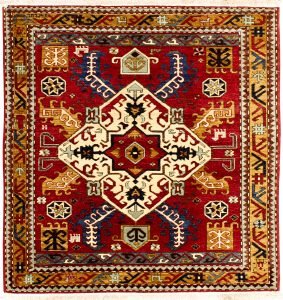
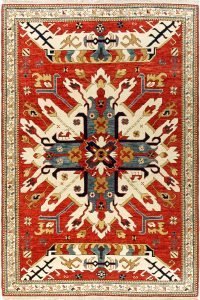
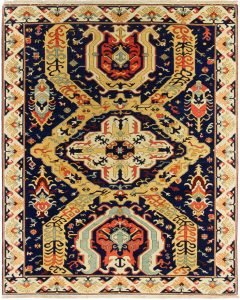
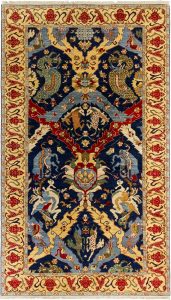
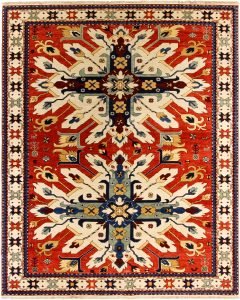
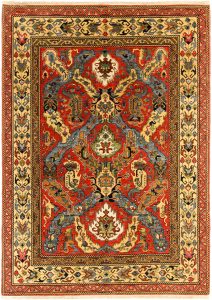
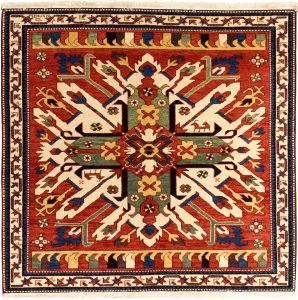
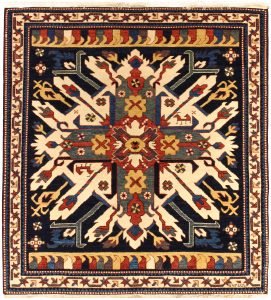
Armenian New Rug Collection
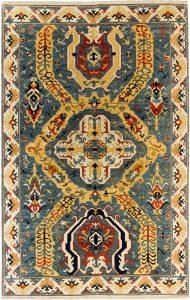
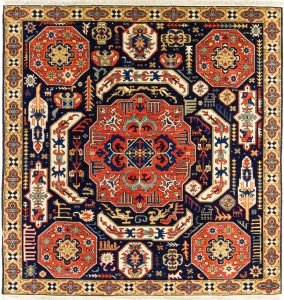
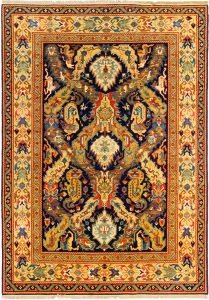
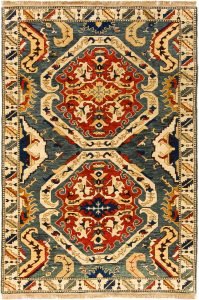
The Armenians are an ancient race whose roots only recently have been reconstructed by archeologists. Their homeland centered on the fertile valley of Mt. Ararat and extended from the Caucasus to the Mediterranean. Arising from obscurity, they became one of the great empires of the ancient world… though their power was short-lived and largely forgotten by history. Armenian rugs are from the central and southern Caucasus, the Armenian homeland. As with rugs from Persia, Armenian rugs are examples of weavers demonstrating free self-expression – to the degree that they sometimes include short messages with dates.
Most Armenians in the Near East were not wealthy merchants but villagers in predominantly rural areas where they produced rugs that undeniably incorporated a collection of Armenian designs. Armenia enjoyed early status in world geography and power. However, events in the latter days of the Ottoman Empire did more than obliterate Armenia from the world’s maps. A sad image of Armenians as exiled and massacred victims took shape in the Armenian Genocide of 1915 – replacing their earlier image as citizens of a small, proud nation, that had been the first to embrace Christianity and had survived intact from ancient times with a tradition for learning, architecture, and the textile arts.
Greater Armenia includes Mount Ararat which remains today the national symbol for Armenians everywhere. Its landscape is dotted with massive stone churches and monasteries that are more than one thousand years old. Armenians have been in diaspora for most of their history – accommodating themselves to the customs and laws of many different lands. Nevertheless, they have preserved their own identity, religion, language, literature, and visual arts.